
Crystal healing is a gentle, non-invasive approach some people use to support mental well-being. Understanding its aims, limits, and current evidence helps people make informed decisions about mental health care.
This article explains what crystal healing is, the philosophy behind it, how practitioners and individuals use crystals, what research says (and doesn’t say), what you might experience, a tour of commonly used stones and their purported uses, and key considerations and limits to keep in mind.
What crystal healing is
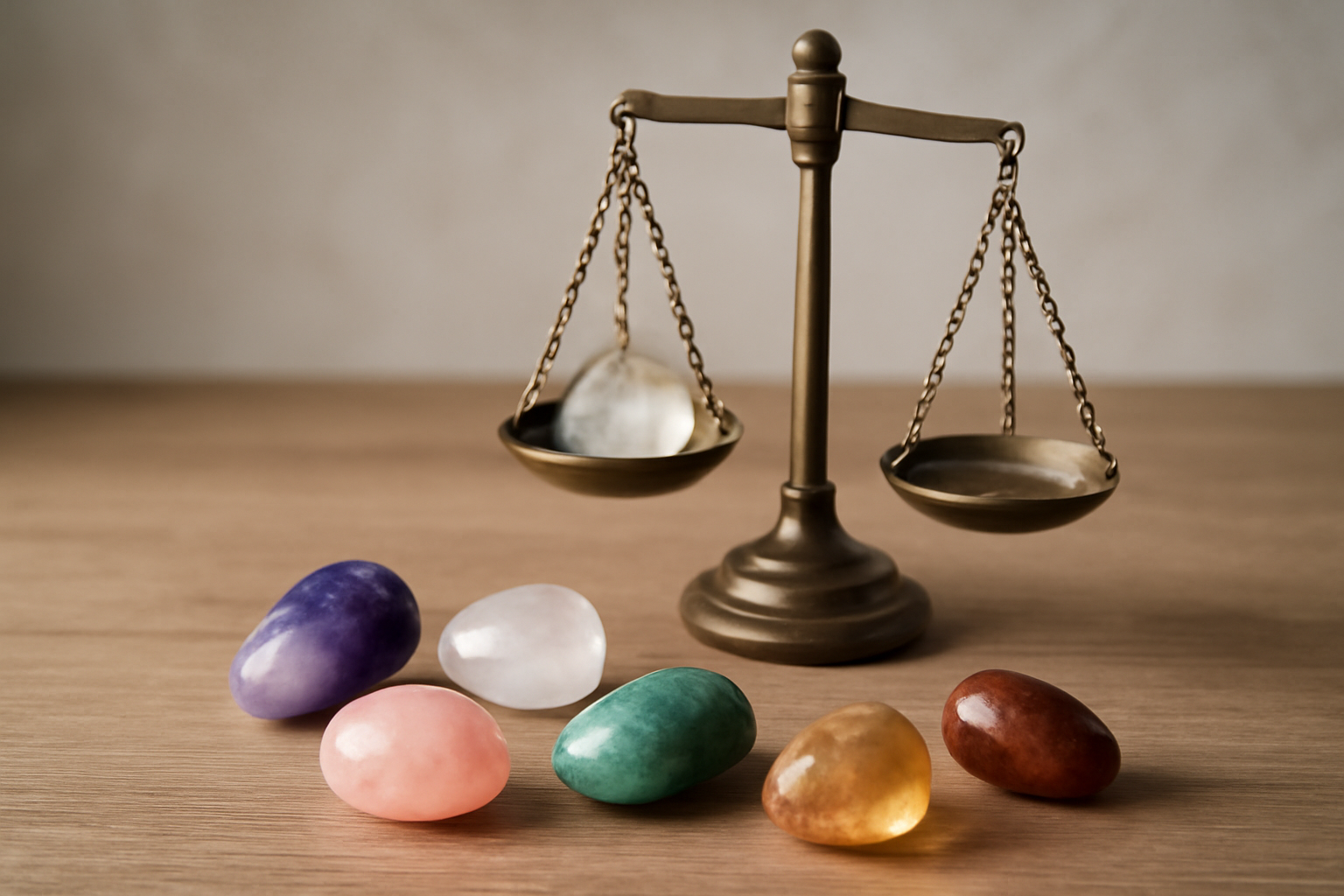
Crystal healing is a holistic practice that suggests crystals and minerals carry energetic properties that can influence mood, balance, and emotional health. Practitioners and many adherents believe placing crystals on the body, carrying them, or placing them in living or work spaces can harmonize energy, reduce stress, and support resilience. While many people report personal benefits — such as a sense of calm or increased focus — these effects are highly subjective and not the same as proven medical treatments.
The philosophy behind crystal healing
The guiding idea is that matter and mind are connected through subtle energy. Crystals are thought to hold distinct vibrational patterns that can interact with the body’s energy field or chakras, helping to shift mood and promote balance. In practice, intention and mindfulness often accompany crystal use: selecting a stone, naming a goal, and bringing attention to one’s breath or body during a moment of reflection. The experience is influenced by context, belief, ritual, and the surrounding environment, which can produce genuine psychological comfort even when the physiological mechanism remains unproven.
How crystal healing is practiced
There isn’t a single standardized method, but a typical approach blends preparation, intention setting, and mindful awareness. Common elements include:
- Choosing crystals that feel meaningful or calming to you.
- Cleansing and charging stones to clear past energy (various methods are used, such as rinsing, smudging with herbs, or moonlight exposure).
- Setting an intention — articulating a focus like “calm during anxiety” or “sleep support.”
- Placing crystals on the body (e.g., wrists, chest, or the third-eye area), around the bed, or in a personal workspace.
- Pairing with mindfulness techniques, breathing, or short meditation to deepen the sense of present-moment awareness.
- Journaling or reflective check-ins after a session to notice any shifts in mood or thoughts.
Crystal healing can be self-guided, or it may be offered by a practitioner who combines stones with other modalities such as energy work or aromatherapy. Regardless of format, many participants emphasize the ritual of slowing down, paying attention to sensations, and cultivating a compassionate inner stance.
Evidence and research
Scientific research directly testing crystal healing for mental health is limited and methodologically uneven. High-quality randomized trials are scarce, and many existing studies are small, exploratory, or retrospective. Consequently, the specific therapeutic effects attributed to crystals — beyond general relaxation or placebo — are not established in the medical literature.
What researchers and clinicians can reasonably say is that relaxation, mindfulness, and supportive rituals often help with stress reduction and mood regulation. If crystal healing induces a calm environment, improves sleep routines, or strengthens a person’s sense of control, those benefits may arise from psychological and behavioral mechanisms rather than from any inherent healing property of the crystals themselves. For people considering crystal healing, it’s important to view it as a complementary practice rather than a substitute for evidence-based mental health care.
For readers seeking a concise overview on what credible sources say about crystal healing, consider consulting reputable health information sites such as the National Center for Complementary and Integrative Health (NCCIH).
Further reading: Crystal Healing – NCCIH
What to expect from crystal healing
People’s experiences with crystal healing vary widely. Some notice an immediate sense of calm or a shift in perspective after a short session, while others feel little overt change. Sessions may be embedded in broader self-care routines — such as a quiet morning ritual or a guided meditation — that can contribute to mood stabilization over time. Important expectations to keep in mind:
- Crystal healing is not a guaranteed cure for mental health conditions. It should not replace evidence-based treatments.
- Benefits are often subjective and linked to personal beliefs, ritual, and context as much as to the crystals themselves.
- Consistency matters for some people: regular practice paired with healthy lifestyle habits can support overall well-being.
- Experiences can include increased body awareness, mindful breathing, a sense of grounding, or a quieting of racing thoughts.
- Be attentive to any emotional responses during or after sessions; consider seeking professional support if distressing emotions arise.
Different crystals and their purported uses
Below is a sampler of stones that people frequently use for mental well-being. The language here reflects common beliefs in crystal healing and is not supported by robust clinical evidence. Use these notes as a gentle guide, not a medical directive.
- Amethyst: often associated with calm and better sleep; used to ease tension and promote restful states.
- Rose Quartz: linked to self-compassion, emotional healing, and soothing heart-centered emotions.
- Clear Quartz: considered a versatile stone that can amplify intention; commonly used to focus energy and attention.
- Black Tourmaline: described as grounding and protective, potentially helping with feelings of safety and stability.
- Lapis Lazuli: thought to support clarity, truthful insight, and communications that reduce inner noise.
- Aventurine: associated with easing anxiety and promoting a gentle sense of well-being.
- Moonstone: linked to emotional balance and adaptability, often used to support mood shifts and cycles.
- Citrine: described as uplifting and energizing, with themes of motivation and positivity.
- Hematite: sometimes used for grounding and concentration, helping with focus during stressful times.
- Obsidian and other protective stones: often used for reflection and clearing mental clutter.
If you’re curious, try a simple practice: choose a stone that “draws you in,” hold it during a few minutes of mindful breathing, and notice any sensations, thoughts, or emotions that arise. Track your experience in a brief journal to reflect on patterns over time. Remember, the effect is highly personal and does not guarantee specific mental health outcomes.
Important considerations and limitations
- Crystals are generally safe to touch, but avoid ingesting them or handling broken shards, especially around children or pets. Some stones can irritate the skin if worn directly or may have sharp edges if cracked.
- Some crystals are porous or may harbor contaminants. Avoid placing porous stones in water for cleansing, and never ingest crystals. If you have concerns about a particular stone, consult reliable sources or a professional.
- Do not rely on crystal healing as a substitute for professional mental health care. If you have a diagnosed condition or experience persistent distress, seek guidance from a licensed clinician or physician.
- People vary in sensitivity to environments or ritual practices. If you notice increased anxiety, fatigue, or distress after a session, pause use and consider a different approach or seek support.
- The sense of control, ritual, and focused attention can boost mood through psychological mechanisms. It’s helpful to acknowledge these effects as part of the experience rather than misattributing them to the stone’s intrinsic powers.
- Crystal healing sits within diverse cultural and spiritual traditions. Engage respectfully, seek reputable sources, and avoid making exaggerated claims about guarantees or cures.
- Crystals vary in price, and sessions (if you choose a practitioner) can add up. Balance personal curiosity with practical mental health needs and the value you place on other evidence-based supports.
Tips for evaluating crystal healing claims
- Look for transparency about what is being claimed and what is not supported by evidence.
- Prioritize approaches with documented benefits for mental health — such as established therapies, sleep hygiene, exercise, mindfulness, and social support.
- Choose reputable sources, whether you’re buying crystals or exploring sessions, and avoid claims of guaranteed cures.
- Discuss any interest in crystal healing with your healthcare provider if you have a mental health condition or are taking medications.
External resources can offer broader context and safety guidance. For a reliable overview of crystal healing from a health-information perspective, see the NCCIH page linked above.
⚠️ This content is for informational purposes only and is not a substitute for professional medical advice, diagnosis, or treatment. Always consult a licensed physician, psychiatrist, psychologist, or other qualified healthcare professional before making decisions about medications, mental health treatment, or alternative and holistic treatment.
