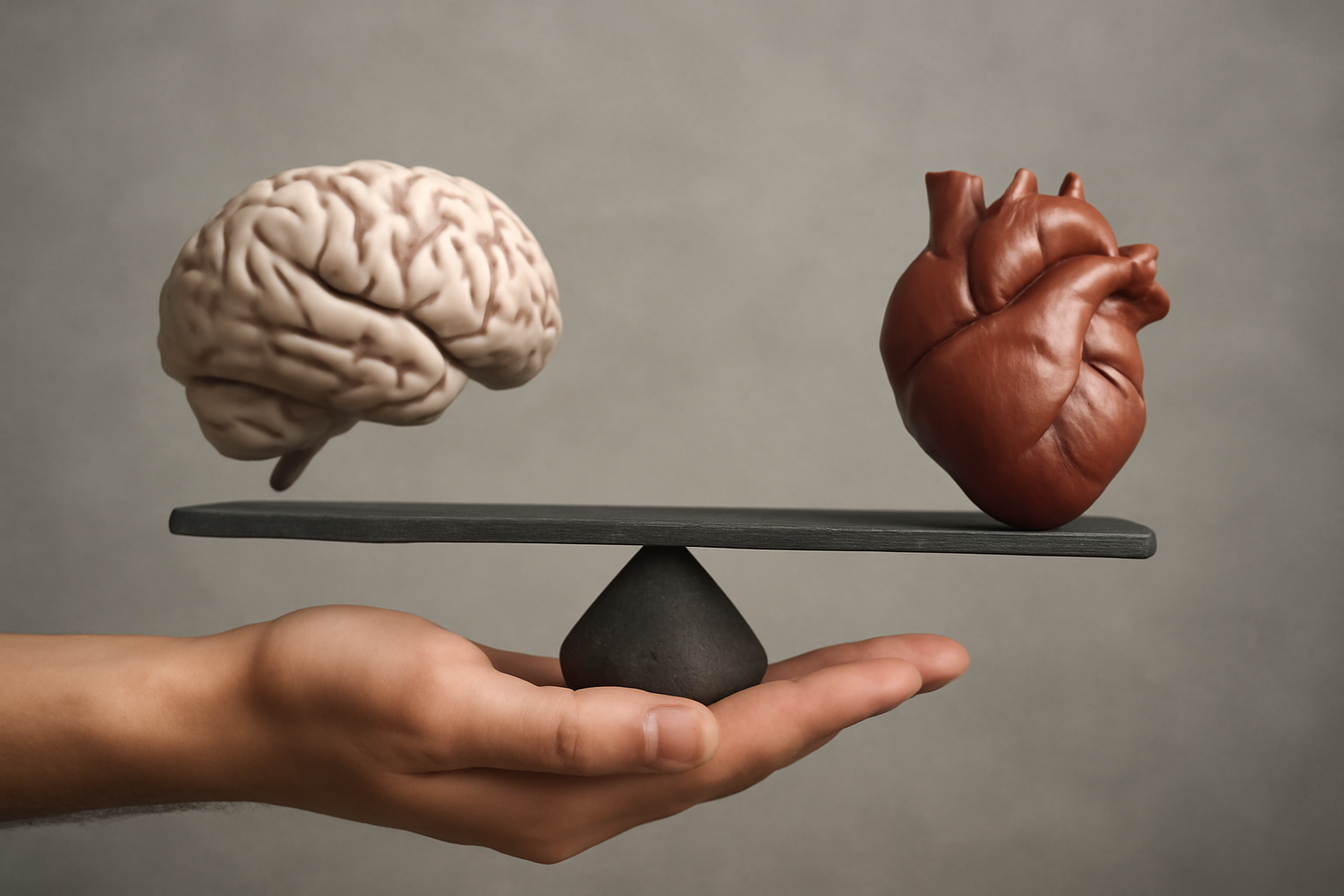
Emotional clarity for people stuck between logic and feeling involves identifying, labeling, and understanding emotions in relation to thoughts.
Begin with the breath; inhale a little longer than you exhale to invite calm. Then scan the body from feet to head, labeling sensations.
recognizing protective tensing that often accompanies emotional stress and replacing it with regulated, adaptive responses.
Learning to trust calm relationships involves recognizing safety cues, choosing steady, predictable interactions, and practicing
Emotional healing without rehashing the past endlessly means learning to acknowledge and process difficult feelings in the present moment.
Learning to be present without vigilance means cultivating a neutral awareness of the here and now, softening attention and accepting experience.
Emotional safety doesn’t mean never feeling unsettled; it means having reliable ways to recognize, slow down, and respond to feelings.
Emotional recalibration after long-term caregiving is the deliberate practice of rebuilding emotional balance by recognizing, labeling
Learning how to feel without catastrophizing involves recognizing and naming emotions in the moment, distinguishing real threats.
Regulating emotions without suppressing them involves recognizing and naming feelings, understanding their purpose, and choosing adaptive responses.